How Functional Burnout Shows Up in Black Women
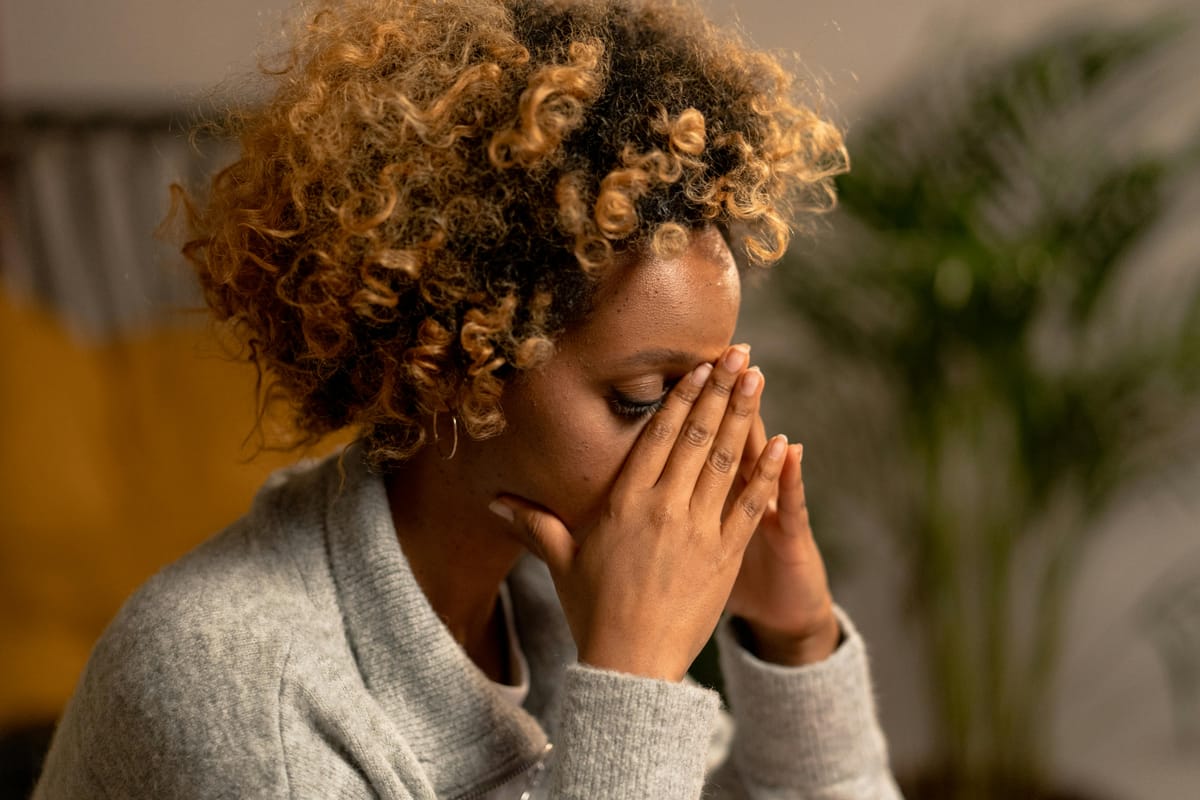
Functional burnout in Black women often looks like success from the outside. For years, I was drowning in plain sight while "performing well" for the people around me. Answering emails with a polite tone, although my chest throbbed with tension, moving through my days while my nervous system screamed for rest. I told myself this was the cost of being sharp, needed, dependable. But my body was keeping different receipts, ones that would eventually demand I learn nervous system regulation or collapse entirely.
Nothing looked broken. And that was the danger.
Because when you're still performing, hitting deadlines, and holding space for others, it's so easy to ignore the quiet ways you are actually falling apart. I didn't know then that I was experiencing functional burnout, a form of nervous system dysregulation common in high-achieving Black women who've been taught that rest is weakness and emotional load reduction is selfish.
I didn't think I was burned out, and I certainly did not think I had functional depression. Burnout and her ally, depression, in my mind, looked like total collapse and malady: missing work, sleeping all day, quitting everything, hurting myself or others. What I felt was more like erosion: slow, steady, hidden. A secret between my mind, body, and soul.
But the signs were evident:
- Doomscrolling all night from being wired but tired
- Snapping and behaving defensively about small things
- Dreading Mondays aka "The Sunday Blues"
- Not investing in my own self-care
Yes, I would say, "I'm fine," but the reality was I was suffering from burnout and functional depression.
How Exhaustion Is Normalized for Strong Black Women
I missed the signs, or so I told myself. The truth is, I saw them, but I didn't think they applied to me. I witnessed and modeled the women in my family who taught me this kind of strength. They didn't rest when they were tired. They rested when the work was done. And the work was never done. They pushed through grief and exhaustion because survival demanded it.
My mother self-sacrificed and put everyone's needs before her own. My grandmother zipped around all day and never waited for anyone to do what she would boldly state, "I can do for myself."
Who was I to question being tired, drained, and depleted?
But my body told the truth. My shoulders were always tight, creeping toward my ears as if bracing for a blow. My breath shallow. My mind refused to rest. And my body felt heavier than it ever had, not just in weight, but in burden.
Without realizing it, I had signed an invisible contract: Be the Strong Black Woman. This contract is what wellness for Black women often looks like when filtered through survival instead of softness. The Strong Woman trope became my identity, not just my adaptation.
And the terms and conditions were: No rest. No softness. No pause. You push. You endure. You disappear into duty. And if you break, you do it in silence. Quickly. Quietly. Privately.
So yeah, on the outside, it looked like I was holding it together. But I was not.
So when my body whispered, I ignored it. When it spoke louder, I did what Strong Black Women do: I negotiated with myself, and I prayed for more strength. Because the nap could come after the email. The exercise will start when I get time because these clothes aren't going to wash themselves. And drinking water daily? Nahhh...I prefer coffee or Celsius Peach, please.
The Moment My Nervous System Refused to Be Ignored
The scream didn't come during a crisis.
I was home working and sitting at the computer, but the tightness in my chest was unbearable. And then all of a sudden, without announcement, a sound tore out of me. That scream was a somatic release years in the making. The first one. Loud. The second. Louder. And the third was the most raw and guttural of all. It surprised me, yes. Yet it felt ancient and honest. Not dictated by thought or comport. This was my body informing me that she would no longer be ignored.
Those screams were followed by grief-stricken sobs that were somatic. Liberating. As if my body was no longer waiting for permission, she was telling me, "No mas." Looking at myself afterward, I saw a softness in my face that felt like home. A woman who looked like me but who had been forgotten. That was the day I realized: this pressure had been building. Quietly. For years.
When High-Functioning Burnout Becomes Identity: Releasing the Strong Woman Trope
Later, I learned the phrase: functional depression. I was depressed. But also productive. So no one noticed. Not even me. My to-do list was always full. My performance was always intact. Comport. Make people laugh, smile, and feel comfortable around you. Don't be too much. Be kind. Considerate. Represent your family. Black Women. Your race. And as a Strong Black woman, the pressure of performance made it hard to dismiss the heaviness I felt inside.
But here is the truth. Strong is our conditioning. Not our identity. We are praised for resilience, for our ability to do so much with so little. To manage it all. To overcome. To exceed limitations. To break barriers. To become first.
We've made strong our identity as if its a title. We're called strong so often, we confuse it with being well.
But our bodies keep the receipts. That woman with the soft eyes, looking back at me, wanted permission.
- Permission to rest before falling apart [INSERT REST GPT LINK]
- Permission to stop being vigilant and scanning the environment for threats
- Permission to take a pause and check in with herself
- Permission to be needy and not just needed
Nervous System Regulation: My First Micro-Rituals for Rest
Healing didn't come in a wave. It arrived in whispers. And the first whisper was, "Baby, you gotta learn to rest."
So I started small. Like micro-rest. These micro-rituals (10-15 minute rest blocks) became my entry point into what I now call rest as technology for Black women. Not self-care as a luxury, but nervous system regulation as a survival tool.
At first, being still was HARD. I'd just stare at the walls. The ceiling. A plant. But one day, I closed my eyes and fell asleep. And when I woke, I felt refreshed. Energized. Clear.
I soon came to realize that I could rest, and not "miss" anything. I was more creative. More vibrant. More organized in my thoughts and behaviors. The answers to work challenges were clear as the night sky after a 15-minute respite.
After I learned to trust rest, I slowed down, and I began to consciously breathe deeper and more fully. This is what the soft life for Black women actually means: not aesthetic or aspiration, but regulated woman identity. A body that feels safe enough to exhale. [INSERT DIAGNOSTIC FREEMIUM LINK]
Within weeks, I noticed and felt a softer shift in my body. My mind was clear. My body was more relaxed. So I did the unconventional thing, and I began giving myself bandwidth. Taking "bio breaks" during 2-hour Zoom meetings. Not scheduling back-to-back on my calendar. Most importantly, I stopped apologizing for needing rest.
Because when a woman feels safe and secure in her body, she expands.
And if you're reading this thinking, "I want this," I want you to know, Sis...You deserve it. Because functioning is not our baseline. Surviving is not the same as thriving.
The truth is, burnout doesn't always look like collapse (it certainly did not for me). Sometimes it's ambition and success dressed up as degrees, titles, and "I'm fines."
Sis, You Deserve Breath, Not Burnout.
Join the Soft Life for Black Women: Let's Soften, Sis
This isn't just my story. It is the story of so many accomplished women. The exhaustion, fatigue, and overextension. But when I speak with women about BLOOM, I receive a resounding, yes. Yes to rest. Yes to breath. Yes, to finally stop being strong at the expense of being well.
Join BLOOM Sis, a weekly email and community for high-achieving, wired-but-tired Black women ready to lead from regulation, not reactivity.
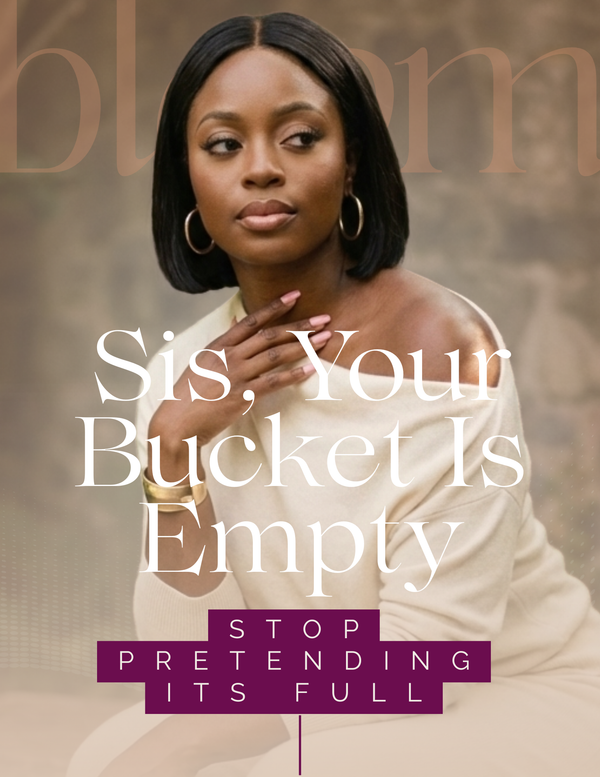
Your first email includes the eBook: Sis, Your Bucket Is Empty (Stop Pretending Its Full).
When you subscribe, you’ll also be added to the early-access waitlist for
The Soft Landing Starter Kit (launching March 2026), a gentle, 7-day practice to help you:
- Rest without guilt
- Set grounded boundaries
- Learn easy and quick somatic practices for daily calm
Your BLOOM season starts the moment you choose to pause. Because the woman you’re becoming? She’s already here. She’s just waiting for permission to exhale.